Why journey time, not distance
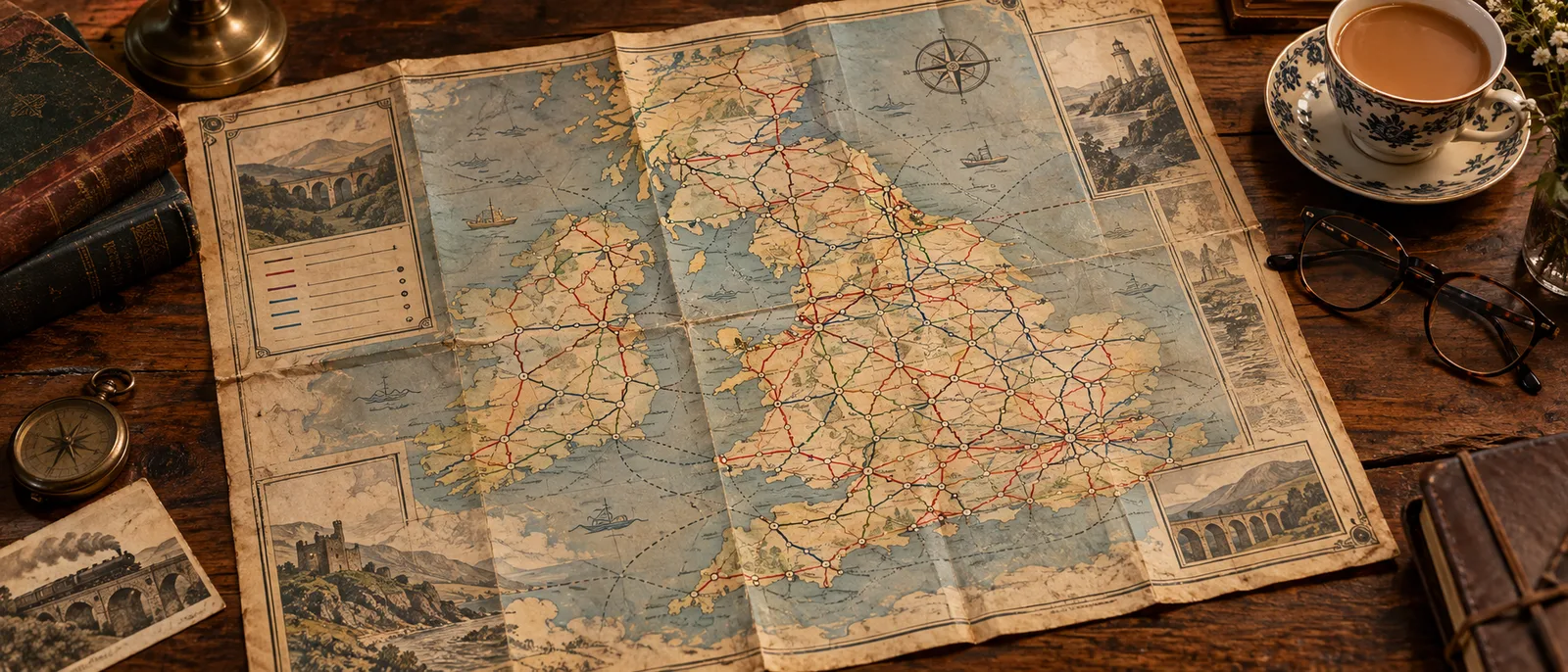
Distance in miles or kilometres doesn't tell you much about a rail trip — London to Edinburgh and London to Penzance are both in the 350–400 mile range, but one takes 4h 8m and the other close to 5h 31m, because of track speed, stops and the physical route. Everything on this site is built around actual timetabled duration, not straight-line distance.
How the numbers were checked
Every journey time, frequency and pass price on this site was checked against the operating rail companies' own published information (LNER, GWR, Avanti West Coast, Caledonian Sleeper) and BritRail's own pass terms, not estimated or carried over from an older source. Where a fastest time and a typical time differ meaningfully, both are shown rather than just the more flattering one.
What this site deliberately doesn't do
This isn't a booking engine, a live fare comparison tool, or a travel agency — there's no live pricing, no reservation system, and no partnership with any rail operator or BritRail. It also doesn't try to be a full guidebook to any single city; for what to actually do once you arrive somewhere, this site hands off to dedicated city guides rather than pretending to cover that ground itself.
Independence
Two-Hour Britain is an independent publication with no commercial or promotional relationship with National Rail, LNER, GWR, Avanti West Coast, ScotRail, Transport for Wales, or BritRail. Nothing on this site should be read as an official resource from any of them, and current fares, schedules and pass terms should always be confirmed directly before booking.
How this site is funded
Two-Hour Britain is free to read, with no subscription or paywall. Keeping it running — researching routes, checking fares against operators' own published figures, and writing and updating every page — takes real time, which is partly covered through commercial partnerships with travel and accommodation businesses rather than through advertising trackers or display ads.
In practice, this means some of the recommendations on pages like Where to Stay are paid placements: an advertiser can pay to have their product or service featured and described as a recommendation. This arrangement is kept separate from the rail data itself — the journey times, fares and pass terms on this site are independently checked against the operators' own published information, as explained above, and that data is never paid for by anyone, rail operator, advertiser or otherwise.